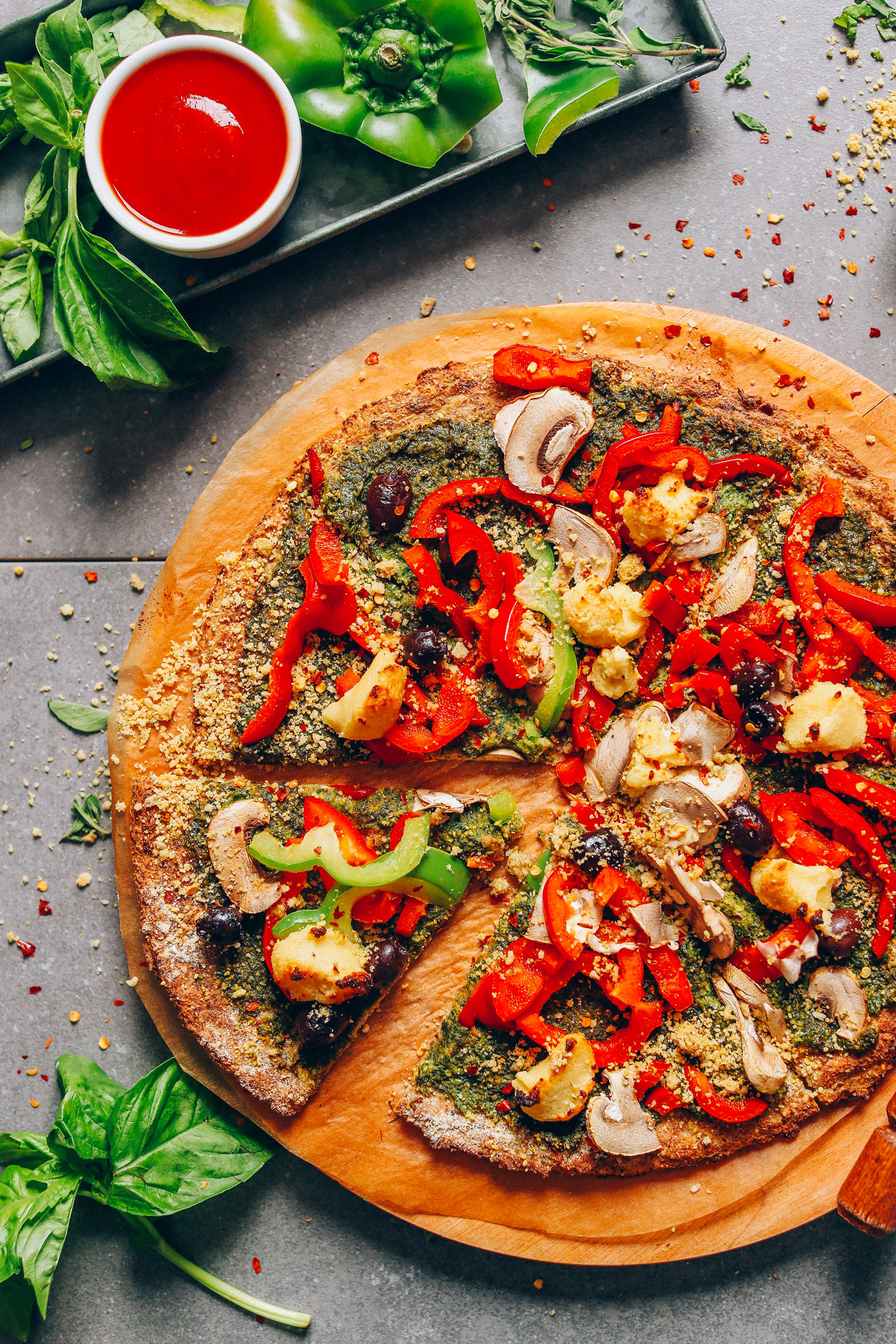
Grain-Free & Delicious: Your Guide to the Best Vegan Cauliflower Crust
Are you craving a pizza night that's both supremely satisfying and aligned with your healthy eating goals? Look no further than the remarkable world of vegan cauliflower pizza crusts! This culinary innovation allows you to enjoy a classic comfort food in a completely new way: grain-free, dairy-free, and egg-free, without sacrificing taste or that coveted "holdable" slice experience. Forget flimsy, crumbly crusts – with the right techniques, your homemade
vegan cauliflower pizza crust will be firm, flavorful, and ready to support all your favorite toppings.
The beauty of this recipe lies in its simplicity and natural ingredients. We're talking about humble cauliflower, transformed into a sturdy foundation for your culinary creations. Whether you're navigating dietary restrictions, looking to boost your vegetable intake, or simply exploring delicious plant-based alternatives, mastering this crust is a game-changer. Get ready to impress your taste buds and your friends with a pizza that proves healthy can be incredibly delicious.
The Essential Secret: Conquering Cauliflower Moisture
The single most critical step in achieving a firm, desirable
vegan cauliflower pizza crust that you can truly hold in your hands is moisture removal. Cauliflower is naturally packed with water, and if you don't extract enough of it, your crust will turn out soggy and difficult to manage. This isn't just a suggestion; it's a non-negotiable step for success!
H3. The Frozen Cauliflower Rice Advantage
While you can certainly start with fresh cauliflower florets, the easiest and often most consistent method involves using frozen cauliflower rice. This ingenious shortcut eliminates the need for steaming or dry roasting, saving you precious time and effort. Here's why and how:
1.
Thaw It Out: Simply transfer your bag of frozen cauliflower rice to the fridge the night before you plan to make pizza. This slow thaw allows the ice crystals to break down, making the moisture easier to release. If you're in a hurry, you can gently heat it to thaw, but be mindful not to cook it through too much.
2.
Squeeze, Squeeze, Squeeze: Once thawed, transfer the cauliflower rice into a clean kitchen towel, nut milk bag, or several layers of cheesecloth. This is where the magic happens! Gather the ends of the towel and twist firmly, squeezing out as much liquid as humanly possible. You'll be amazed at how much water comes out – often a significant amount, upwards of half a cup or more. The drier your "cauliflower pulp" is at this stage, the crisper your final crust will be.
Patience is key here; don't rush this step! For a deeper dive into this time-saving technique, check out our guide on
Easy Vegan Cauliflower Pizza Crust: The Frozen Rice Secret.
If you opt for fresh cauliflower florets, you'll first need to cook them until tender (steaming or dry roasting works well) and then process them into a rice-like consistency using a food processor before moving on to the crucial squeezing step.
Crafting Your Grain-Free Dough: Beyond the Basics
Once you have your super-dry cauliflower pulp, you're ready to assemble your extraordinary dough. This isn't your average stretchy, gluten-rich pizza dough, and understanding that is the first step to success. Instead, we're building a cohesive, pressable base using natural binders.
H3. Key Ingredients and Their Roles
*
Ground Flax Seeds: This is the superstar binder that replaces eggs in our vegan recipe. When combined with a tiny bit of water (less than you might think, precisely because the cauliflower already holds some moisture), ground flax forms a gelatinous, egg-like consistency that helps hold the crust together. For a detailed look at achieving that perfect holdable crust without eggs, explore our article on
Egg-Free Vegan Cauliflower Pizza: Achieve a Perfect Holdable Crust.
*
Almond Flour: This adds a lovely nutty flavor, helps absorb any residual moisture, and contributes to the crust's structure and texture. It also keeps the crust wonderfully grain-free.
*
Seasonings: Don't underestimate the power of a good pinch of salt, pepper, garlic powder, and Italian herbs. These simple additions elevate the flavor of your crust, making it a delicious component of the pizza itself, not just a vehicle for toppings.
H3. Mixing and Shaping for Success
Combine your dry cauliflower pulp with the ground flax, almond flour, and seasonings in a large bowl. At first, it might look crumbly and uncooperative. Don't fret! The best way to get this "dough" to come together is by using your hands. Knead and mix vigorously; the warmth from your hands and the slight pressure will help the flax egg activate and bind everything into a sticky, pliable mass. An electric stand mixer with a paddle attachment can also work wonders.
Once the dough is cohesive, prepare a large pizza sheet by lining it with parchment paper. This is essential for preventing sticking and making transfer easier. Now, gently press the dough out onto the parchment paper. If the dough sticks to your hands too much, simply wet your hands slightly – this provides a non-stick surface. Aim for an even thickness across the entire crust, roughly 1/4 inch. The flatter and more uniform you get it, the drier and crispier your baked crust will be. You can make one large 12-14 inch crust or two smaller 6-8 inch ones, which are often easier to flip and handle.
Baking for Perfection: The Golden Crust
Pre-baking your crust is a crucial step to ensure it's firm enough to hold all your delicious toppings and achieve that perfect crispy texture. Think of it as creating a blank canvas that's already half-painted.
Bake your crust in a preheated oven until it's visibly dry, firm to the touch, and easy to pick up. This typically takes around 40-50 minutes, depending on your oven and the thickness of your crust. Some recipes suggest flipping the crust halfway through and baking for an additional 10-15 minutes on the other side to ensure both surfaces are thoroughly dried out and crispy. This extra step can make a significant difference in achieving a truly robust crust. If you have a pizza stone or steel, preheating it in the oven and sliding the parchment paper with the crust onto it can also contribute to a wonderfully crisp bottom.
Once your crust is beautifully golden and firm, it's ready for its delicious destiny! Add your favorite vegan cheese, sauces, and an abundance of fresh vegetables. Return your assembled pizza to the oven until the cheese is melted and bubbly, and the toppings are heated through.
Why Go Vegan & Grain-Free with Your Pizza?
Beyond the sheer delight of a delicious pizza, opting for a
vegan cauliflower pizza crust offers a wealth of benefits:
*
Nutrient-Rich: Cauliflower is a powerhouse vegetable, packed with vitamins C and K, folate, and fiber. Swapping out traditional grain-based crusts for cauliflower significantly boosts your vegetable intake.
*
Grain-Free & Gluten-Free: For those with celiac disease, gluten sensitivity, or simply looking to reduce grain consumption, this crust is a fantastic solution. It offers a satisfying alternative that doesn't compromise on flavor or texture. Many people also report feeling less "bloated" after enjoying a grain-free meal.
*
Dairy-Free & Egg-Free: As a completely vegan option, this crust is naturally free of dairy and eggs, making it suitable for those with allergies, intolerances, or ethical dietary choices.
*
Low-Carb Friendly: While not strictly ketogenic, cauliflower crusts are significantly lower in carbohydrates than traditional flour-based crusts, making them an excellent choice for those monitoring their carb intake.
*
Light & Satisfying: You get all the comfort and joy of pizza without the heavy, sometimes sluggish feeling that can accompany traditional versions. It’s a lighter meal that still feels indulgent.
Conclusion
Making your own
vegan cauliflower pizza crust might seem like a gourmet endeavor, but with the right approach – primarily focusing on thorough moisture removal and utilizing the magic of ground flax – it's an incredibly rewarding and surprisingly straightforward process. You'll create a delicious, wholesome, and customizable foundation for your pizza nights, free from grains, dairy, and eggs. So, embrace the humble cauliflower, experiment with your favorite toppings, and get ready to savor every grain-free, holdable, and utterly delicious bite! Your healthy, homemade pizza adventure starts now.